
Cargo
- Verified dimensions
- Verified weight
- Fragile or exposed parts
- Support and lashing points
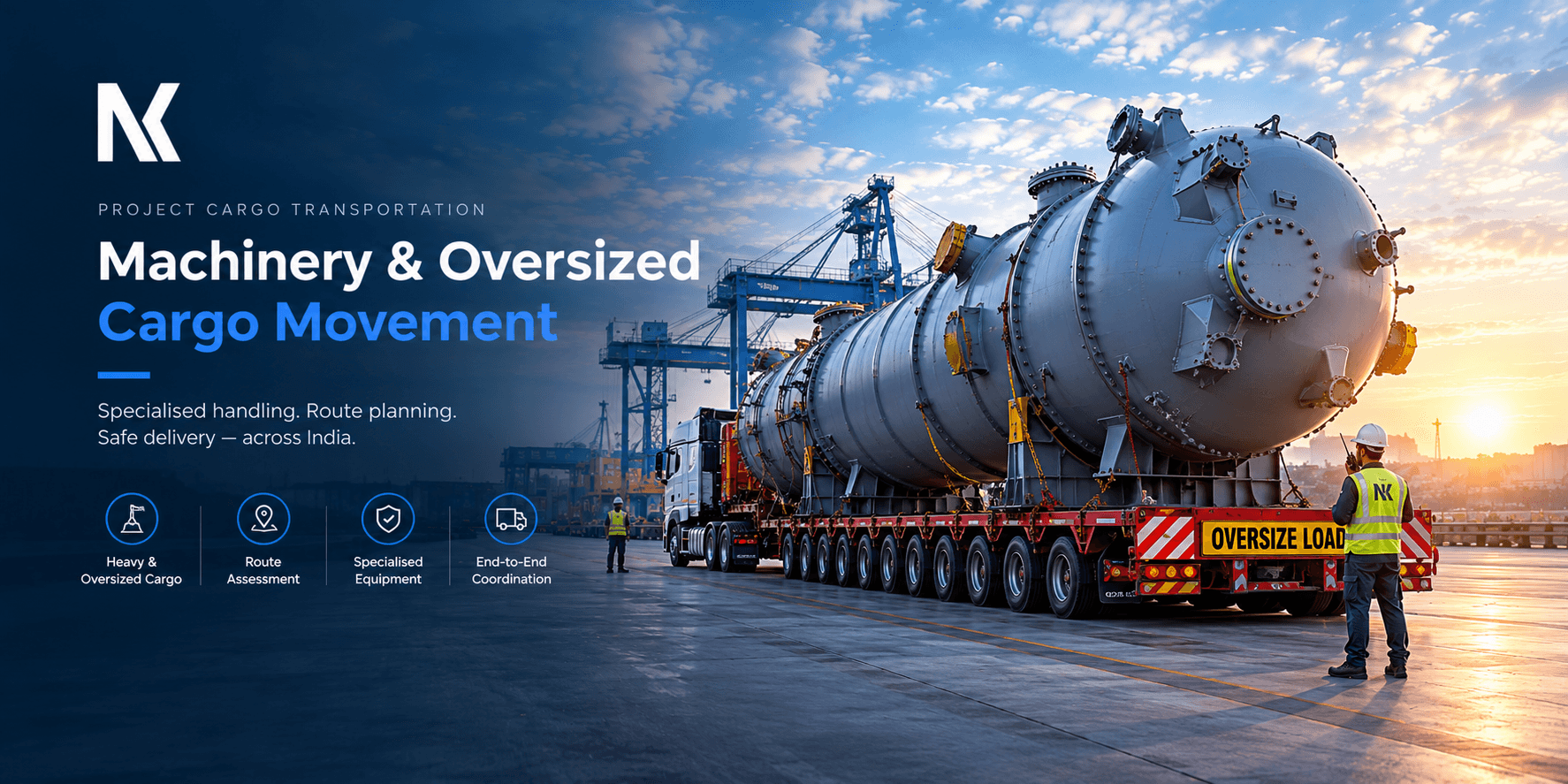
Project cargo
Plan machinery, equipment and non-routine industrial freight around dimensions, weight, lifting, route access and destination readiness.
Non-routine freight
Project cargo cannot be reduced to a truck-size request. The load's centre of gravity, dimensions, weight, lifting points and support requirements influence the entire movement.
NARSIK begins by clarifying what is being moved and what must happen at both sites.
Survey
Engineer
Prepare
Load
Move
Position
Machinery drawings, photographs, dimensions and verified weight help establish a realistic transport requirement.
Gather drawings, dimensions, weight, photos and handling notes.
Understand access, loading, unloading and ground conditions.
Consider clearances, restrictions and practical access.
Identify transport, lifting, lashing and support needs.
Align people, equipment, timing and movement controls.
Coordinate unloading and the agreed delivery position.
Assumptions can undermine capacity and lifting decisions.
The selected vehicle must reach both loading and unloading points.
Transport, crane and site teams must work to one sequence.
Support, lashing and exposed components need advance consideration.
Questions answered
They affect equipment selection, route access, loading geometry and commercial feasibility.
Photos help, but verified dimensions, weight and technical information remain important for planning.
Responsibilities should be defined during scope review because site equipment and labour vary.
The requirement depends on cargo dimensions, vehicle configuration, origin, destination and route complexity.
Plan the movement
Share the route, cargo profile, timing and handling requirements. NARSIK will review the shipment before recommending the next step.